


Why Australia’s New C&I Battery Incentive Could Unlock Projects from 20 kWh to 30 MWh

New South Wales will introduce a new incentive for commercial and industrial battery energy storage projects from September 1, 2026, offering eligible businesses an upfront discount on battery installation costs.
The scheme covers projects ranging from 20 kWh to 30 MWh, extending from small commercial battery systems to much larger behind-the-meter energy storage projects.
According to the NSW government, estimated installation cost reductions range from 30%–40% for solar-plus-storage projects and 20%–30% for standalone battery installations.
A 20 kWh–30 MWh Market Window
The unusually broad capacity range allows the scheme to target a wide range of commercial and industrial electricity users.
Official examples indicate that a grocery store could receive an estimated discount of around A$37,000, while a dairy farm could potentially receive approximately A$355,000.
Restaurants, takeaway businesses and convenience stores could also consider systems in the 20–50 kWh range.
The 30 MWh threshold refers to energy capacity rather than rated power, and the scheme is designed for grid-connected commercial and industrial projects intended to reduce peak electricity demand.
Whether standalone grid-scale battery projects qualify depends on the project entity, connection arrangements and detailed implementation requirements.
How Does the Discount Work?
Rather than operating as a conventional fixed government subsidy, the incentive is linked to NSW's peak demand reduction certificate trading mechanism.
Installers work with approved certificate providers to calculate the project's eligible peak demand reduction and create certificates under the relevant rules.
Energy companies with compliance obligations then purchase these certificates. Revenue generated from certificate sales is reflected in the upfront discount offered to businesses installing eligible battery systems.
The scheme has reportedly been legislated to continue through 2050 and currently has no fixed termination date, although its rules are subject to periodic review.
Importantly, the 20%–40% figures are estimated ranges rather than fixed subsidy rates. The final customer discount can be influenced by certificate calculations, equipment configuration, installation complexity and compliance costs.
This means businesses evaluating suppliers will need to look beyond equipment pricing and assess whether certificate-related value is being adequately passed through into the final installation quotation.
Why Does Solar + BESS Receive a Higher Discount?
The scheme provides a stronger estimated discount for projects combining new or expanded solar PV with battery storage.
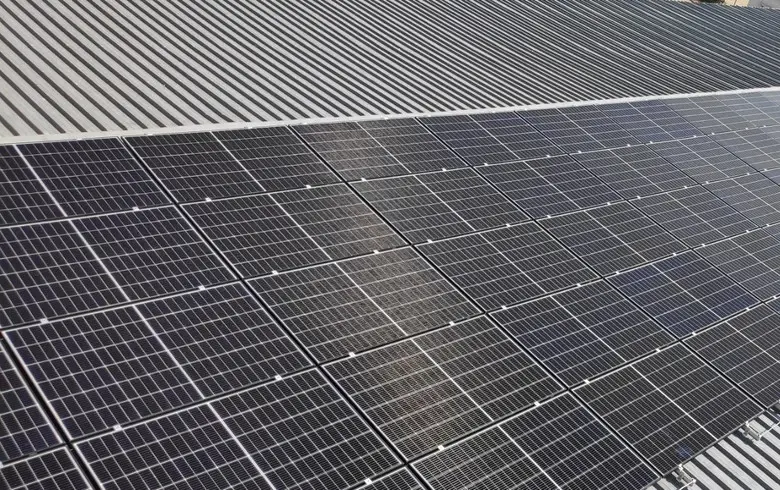
Projects adding or expanding solar alongside battery installation could see installation costs reduced by approximately 30%–40%, compared with 20%–30% for battery-only projects.
To qualify for the higher solar-plus-storage range, newly installed solar capacity must be completed within 90 days before or after the battery installation.
For businesses with existing solar systems, the PV system must also be expanded, with additional solar capacity equivalent to at least 25% of the new battery capacity.
The policy design effectively links the financial incentive to the project's contribution to peak-demand reduction.
Solar can help charge batteries before peak-demand periods, potentially allowing storage systems to maintain sufficient state of charge and discharge during periods when the grid is under greater pressure.
What Does This Mean for Battery Suppliers?
The scheme could create new opportunities for battery manufacturers and system integrators looking to enter or expand in the Australian C&I energy storage market.
However, equipment pricing alone will not determine competitiveness.
Projects seeking the incentive need to coordinate:
Battery equipment
Solar PV where applicable
Local installation
Grid connection
Metering
Certificate calculation and application
Compliance and project acceptance
For Chinese battery and solar suppliers, this means local delivery capabilities and partnerships could become as important as hardware costs.
Companies may need local partners capable of handling eligibility assessment, grid-connection design, certificate applications, installation and after-sales services.
Three Market Signals to Watch
① The capacity range is unusually broad
From 20 kWh to 30 MWh, the scheme connects small commercial applications with much larger behind-the-meter projects, potentially expanding the addressable C&I BESS market.
② Peak-demand value is being monetised upfront
Instead of waiting for the long-term operational value of demand reduction, the certificate mechanism allows part of the future grid-support value to be reflected in the customer's initial installation discount.
③ Local execution could determine market access
For international suppliers, entering the NSW market will require more than competitive battery pricing. Equipment, installation, metering, certification and project acceptance need to operate as one delivery chain.
The key question for suppliers is therefore not simply “How much can the battery cost?”, but “How much of the policy value can actually be converted into a competitive delivered project?”





Comments