


August Solar Eclipse to Test European and U.S. Grid Flexibility Amid Rapid Solar Ramps

The upcoming 12 August 2026 total solar eclipse is expected to provide a real-world stress test for electricity grids across Europe and parts of North America, particularly as the rapid reduction and subsequent recovery of solar irradiance could challenge grid balancing, renewable integration and energy storage dispatch. According to Solcast, a DNV company, the event will affect solar generation across a wide geographic area, creating a unique operational test for increasingly solar-dependent electricity systems.
The eclipse will track from Siberia across the Arctic, Greenland and Iceland before reaching northern Spain and northeastern Portugal, marking the first total solar eclipse visible over mainland Europe since 1999. Much of the rest of Europe will experience a deep partial eclipse during the early evening, while parts of the eastern United States and Quebec will see a smaller partial eclipse around midday.
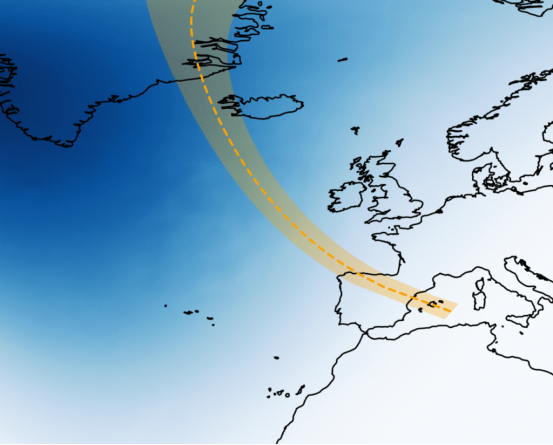
For electricity grids with significant solar penetration, the event presents a particularly interesting challenge because solar irradiance will decline across a large number of PV assets simultaneously. Markets with substantial behind-the-meter rooftop solar capacity could face an additional increase in grid demand as distributed solar generation falls, potentially placing greater pressure on grid response capabilities, peaking resources and battery energy storage dispatch.
Weather conditions will be another important factor determining the actual impact. Current forecasts indicate relatively favorable viewing conditions in Madrid, Paris and London, where cloud opacity is generally expected to remain below 25% during the eclipse. Amsterdam and Berlin could experience greater cloud interference, with forecast cloud opacity of approximately 40% and 35%, respectively. Reykjavik, despite being located within the path of totality, is expected to face significantly cloudier conditions, with cloud opacity potentially reaching 60% to 80%.
The timing of the eclipse is particularly important from an electricity-system perspective. Maximum eclipse is expected at approximately 17:48 local time in Reykjavik, 19:13 in London, 20:17 in Paris, 20:10 in Amsterdam, 20:08 in Berlin and 20:32 in Madrid. Because the event occurs relatively late in the day across much of Europe, the Sun will already be relatively low in the western sky, limiting its impact on total daily solar irradiation.
As a result, the regions experiencing the deepest eclipse will not necessarily experience the largest reduction in total daily solar irradiation. Solcast estimates that most of Spain, Portugal, France and the UK will lose only around 1% of daily irradiance, while Iceland could lose close to 3% and Greenland up to 6%. The difference is primarily determined by the timing of the eclipse as well as its depth, with earlier-occurring eclipses having a greater impact on daily solar generation.
A similar pattern is expected across North America. Although only a partial eclipse will be visible across parts of the eastern United States and Quebec, the event will occur much closer to solar noon. Solcast forecasts approximately 2% daily irradiance loss in New York, while Quebec could experience losses of between 3% and 4%.
However, relatively small losses in daily solar irradiation can still translate into significant operational challenges for electricity networks. Solcast’s grid aggregation modelling indicates that Germany could experience the largest total energy loss and the sharpest generation ramp among the regions studied. Despite losing only around 1% of daily irradiance, Germany is projected to lose approximately 1,250 MWh, with generation recovery reaching a maximum ramp rate of 13,150 MW/h.
France is forecast to lose approximately 540 MWh, accompanied by a maximum ramp rate of around 5,070 MW/h. The Netherlands and the UK are expected to experience similar overall energy losses of approximately 1,050 MWh and 920 MWh, respectively, but their ramp profiles differ significantly. The Netherlands could experience a maximum ramp rate of approximately 6,120 MW/h, compared with around 3,800 MW/h in the UK.
The expected impacts across North America are comparatively smaller. ISO-NE is projected to experience around 550 MWh of energy loss and a maximum ramp rate of approximately 1,180 MW/h, while NYISO could see around 340 MWh of lost generation and a maximum ramp rate of approximately 790 MW/h.
According to Solcast, the sharper ramp rates expected in Europe are closely linked to the timing of the eclipse. The reduction in solar generation caused by the eclipse will occur shortly before the natural decline in solar generation associated with sunset, forcing electricity grids to manage two major changes in solar output within a relatively short period.
The event therefore provides an important real-world demonstration of the challenges associated with managing high shares of variable renewable generation. It also highlights the growing importance of grid flexibility, energy storage, accurate solar forecasting and rapid-response generation as solar penetration increases.
Solcast generates its forecasts by tracking clouds and aerosols globally at 1–2 km resolution, combining satellite observations with proprietary AI and machine-learning algorithms. Its data supports high-resolution irradiance modelling and cloud-tracking forecasts, with typical model bias below 2%. The company’s data is currently used by more than 350 companies managing over 350 GW of solar assets globally.
The August eclipse will therefore serve not only as a rare astronomical event, but also as a valuable operational test for renewable-heavy electricity systems. Its impact could provide further insight into how grid operators, solar asset owners and energy storage providers can prepare for rapid changes in renewable generation and maintain system reliability.





Comments