


Germany’s Renewable Power Capacity Up 11% in 2025

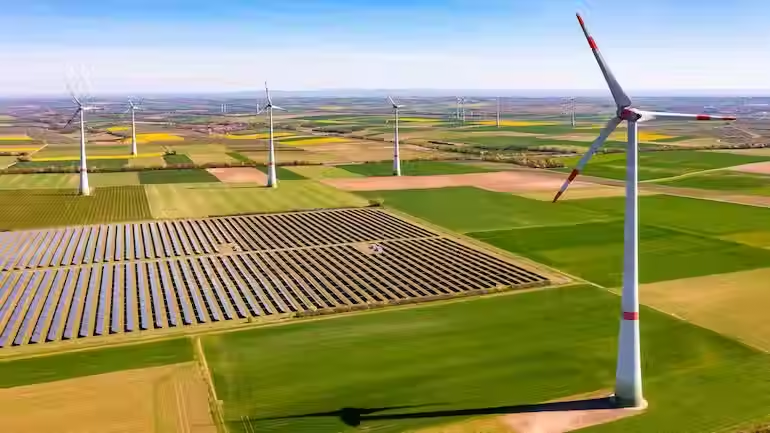
Germany expanded its renewable electricity capacity by around 11% in 2025, adding nearly 21 GW to reach just under 210 GW in total, according to figures cited by Clean Energy Wire. The head of the federal grid regulator BNetzA said solar again led new build, while onshore wind made a clear comeback after a weaker 2024.
By year-end, solar PV capacity stood at 117 GW, compared with 68.1 GW of onshore wind. New solar installations reached 16.4 GW in 2025, roughly split between rooftop systems on buildings and ground-mounted plants. BNetzA calculates that Germany will need to add on average 19.6 GW of solar per year in the coming years to hit its 215 GW PV target by 2030.
Onshore wind capacity grew by 4.6 GW in 2025, far outpacing the 2.6 GW added in 2024. At sea, Germany’s offshore wind fleet in the North and Baltic Seas reached 9.5 GW, after a further 0.3 GW was commissioned during the year. Meeting the goal of 115 GW offshore wind by 2030 will require average annual additions of 9.4 GW, the regulator said.
Momentum in onshore wind was reflected in the latest auction round, where around 3.5 GW of capacity was tendered but developers submitted a record 8.1 GW in bids—more than double the volume on offer. BNetzA President Klaus Müller highlighted that every onshore wind tender in 2025 was oversubscribed, calling the high bid levels “a strong signal” for future build-out. The average awarded price fell to €0.0606/kWh, down from €0.0657/kWh in the previous round, indicating intensifying competition.
Kerstin Andreae, head of energy industry association BDEW, said the results show that “robust competition in tenders is driving support costs down,” and argued that projects already approved and awarded suggest the 2030 expansion path is achievable—as long as policymakers maintain a stable, investment-friendly framework.





Comments