


Malaysia’s BESS Market Enters New Growth Phase as PUC Moves into Energy Storage

Malaysia’s renewable energy construction sector is expected to enter a new phase of growth in the coming months, with battery energy storage systems (BESS) emerging as an increasingly important part of the country’s power infrastructure. The shift comes as Malaysia accelerates solar deployment while preparing its electricity system for rising demand from data centres and other energy-intensive industries.
Malaysia is increasingly incorporating BESS into major solar power developments to support grid stability. The country aims to increase renewable energy to 70% of installed power generation capacity by 2050, a target that will require substantially greater energy storage capacity to manage fluctuations in renewable generation.
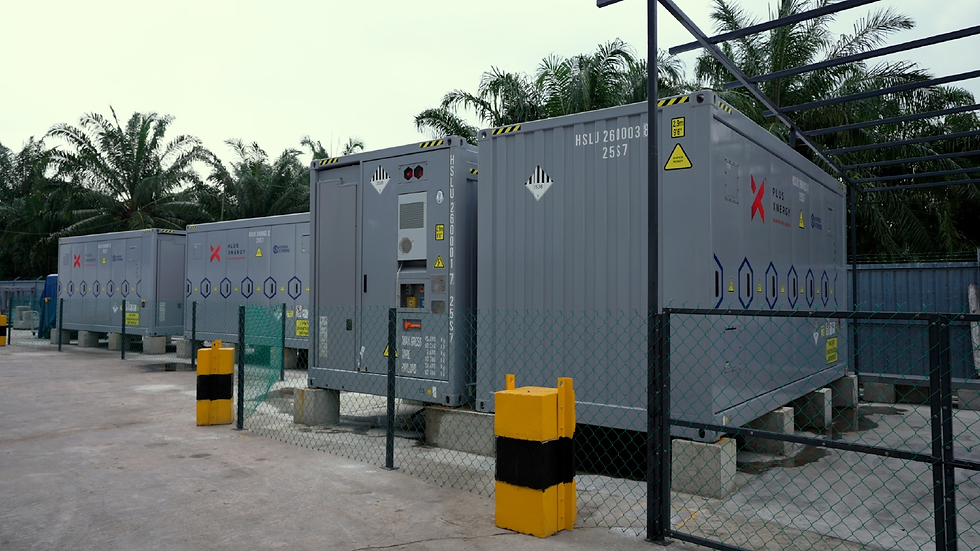
The government has already begun establishing a utility-scale BESS market. In November 2024, Malaysia’s Energy Commission launched the country’s first competitive bidding process for utility-scale battery storage, offering a total of 400 MW/1,600 MWh across four projects. Each project has a capacity of 100 MW/400 MWh, with commercial operation targeted from 2026.
The move is significant because it positions BESS as part of Malaysia’s wider electricity infrastructure rather than simply an additional technology deployed by individual renewable energy developers. At the same time, the rapid expansion of Malaysia’s data centre industry is creating another potential source of demand for energy storage.
Malaysia has emerged as a major Southeast Asian data centre hub, attracting billions of ringgit in investment as global technology companies expand their digital infrastructure. Data centres require large quantities of reliable electricity and have limited tolerance for prolonged power interruptions. While conventional backup systems such as diesel generators remain widely used, BESS could provide an additional solution capable of responding almost instantaneously to grid failures or fluctuations.
A July 2026 report from Hong Leong Investment Bank (HLIB) identified battery storage as the next major growth opportunity for Malaysia’s renewable energy construction sector and estimated the market opportunity could reach billions of ringgit. HLIB also noted that major renewable energy programmes, including Large Scale Solar 6 (LSS6) and the Corporate Renewable Energy Supply Scheme (CRESS), are expected to require storage capabilities, prompting developers to accelerate battery procurement plans during the second half of 2026.
PUC Moves into Malaysia’s BESS Market
Against this backdrop, Malaysian digital services company PUC Bhd is positioning itself to enter the country’s rapidly developing energy storage market. The company has proposed acquiring H BESS Sdn Bhd for RM6.75 million, giving PUC an existing operating platform through which it can establish a presence in the BESS value chain without building its capabilities entirely from scratch.
PUC managing director Cheong Chia Chou described the acquisition as a strategic fit, particularly as energy storage moves from a supporting technology toward a more critical component of modern power systems. The company expects the transaction to provide a new growth avenue as demand for energy storage increases alongside solar deployment and electricity consumption.
H BESS is engaged in the assembly and supply of BESS solutions and has secured a letter of intent for a 4,626 kWh BESS project at a five-star hotel in Kuala Lumpur. The company also has a partnership with China-based battery storage manufacturer Hithium Tech HK to establish a BESS assembly line in Malaysia.
The proposed assembly facility could help develop local battery manufacturing capabilities, with a targeted annual production capacity of up to 2.0 GWh if completed. H BESS director Yong Tzen Wae said the company plans to initially import and install battery systems before gradually localising assembly and expanding its capabilities within Malaysia.
The company also sees potential to expand beyond Malaysia and become a regional energy storage player, as other Southeast Asian markets are expected to increasingly seek localised energy storage solutions.
The proposed acquisition would be funded through a private placement of up to 304.8 million new PUC shares, equivalent to 10% of the company’s existing issued share capital. At an indicative issue price of 3.44 sen per share, the placement is expected to raise approximately RM10.49 million, of which RM6.75 million would finance the acquisition, RM3.02 million would be allocated to working capital and RM720,000 would cover related expenses.
The transaction is also expected to provide PUC with a degree of earnings visibility during its expansion phase. The acquisition agreement includes a profit guarantee of RM3.5 million in aggregate audited net profit for financial years 2026 to 2028, according to Cheong.
Solar Growth Creates Structural Demand for BESS
The underlying market opportunity is closely linked to Malaysia’s renewable energy expansion. According to H BESS director Datuk Chua Sai Men, greater renewable penetration will require additional storage capacity to maintain grid stability. Once renewable energy reaches a certain level within the electricity mix, the need for BESS becomes increasingly difficult to avoid.
The LSS6 programme, which includes a requirement for 1,250 MW of BESS capacity, is expected to provide additional momentum for the sector. The combination of government-led renewable energy programmes, increasing electricity demand and growing solar deployment could create a significant long-term market for battery storage solutions.
The opportunity is not limited to utility-scale renewable energy projects. Commercial and industrial customers are also expected to become an important market for BESS, particularly as electricity demand from data centres continues to increase. Solar generation can provide an additional source of electricity for these facilities, while batteries can help manage the intermittency of solar output and provide a more stable power supply.
As electricity tariffs increase, the economics of BESS could also become more attractive for commercial and industrial users seeking to optimise electricity consumption and reduce exposure to peak electricity costs. Battery systems could therefore serve multiple functions, including renewable energy integration, peak management, backup power and grid flexibility.
BESS could also increasingly compete with conventional diesel backup systems at critical facilities such as data centres. By providing fast-response backup power with lower emissions, battery storage could become an important component of the next generation of resilient energy infrastructure.
For PUC, the proposed H BESS acquisition represents an initial step toward establishing a broader position in Malaysia’s energy storage industry. The company plans to move beyond importing and installing battery systems by developing local assembly capabilities and potentially progressing toward domestic manufacturing in the longer term.





Comments