


Why 1.25 GW of Mandatory BESS Could Make Malaysia’s LSS6 More Valuable Than Previous Solar Rounds

Malaysia’s sixth Large Scale Solar (LSS6) programme is set to create a major new investment cycle for the country’s renewable energy sector, with expected private investment of RM13–15 billion.

The programme will allocate:
2.5 GW Solar + 1.25 GW BESS
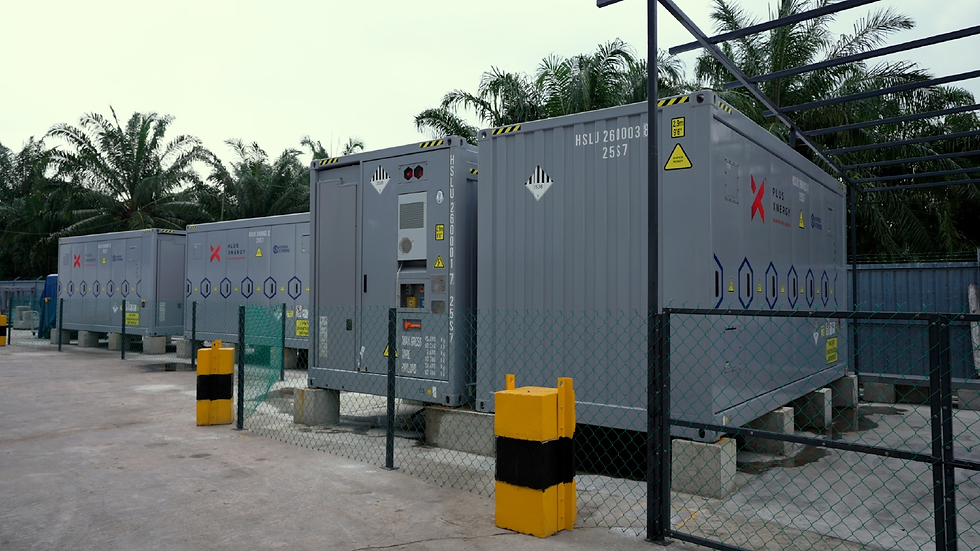
More importantly, LSS6 will be Malaysia’s first LSS programme to mandate battery energy storage system (BESS) integration, potentially increasing both project complexity and contract value for solar developers and EPCC contractors.
☀️ A RM13–15 Billion Investment Opportunity
The government expects LSS6 projects to be commissioned progressively, with full commercial operation targeted by December 31, 2029.
Of the total solar quota:
2,500 MW — total solar capacity
1,250 MW — BESS capacity
150 MW — reserved for Bumiputera companies in Peninsular Malaysia
Maybank Investment Bank estimates that LSS6 could generate approximately:
RM8–9 Billion
in opportunities for companies with engineering, procurement, construction and commissioning (EPCC) capabilities.
The programme could therefore provide an important source of new orders as LSS5 projects approach completion.
🔋 Why Does Mandatory BESS Matter?
Unlike previous LSS programmes, LSS6 requires battery storage to be integrated into the projects.
This means the opportunity is no longer limited to conventional utility-scale solar EPC.
The combination of:
Solar generation + Battery storage + EPCC
could create a larger addressable market for companies capable of delivering integrated renewable energy systems.
For Malaysia’s solar industry, LSS6 therefore represents a potential shift from solar capacity expansion toward solar-plus-storage deployment.
📈 Which Companies Could Benefit?
Research houses have identified several potential beneficiaries.
Solarvest Holdings Bhd has been selected as Maybank IB’s top pick, supported by its estimated 30% market share in Malaysia’s solar projects.
RHB Research estimates:
Solarvest
→ 20–30% potential LSS6 share
→ 500–750 MW Solar
→ 250–375 MW BESS
Samaiden
→ 10–15% potential LSS6 share
→ 250–375 MW Solar
→ 125–188 MW BESS
RHB estimates that these awards could contribute to significant order-book replenishment, with its FY2027 assumptions reaching RM2.7 billion for Solarvest and RM600 million for Samaiden.
🔥 The Bigger Market Signal
LSS6 is more than another round of Malaysia’s solar tender programme.
With 1.25 GW of mandatory BESS, the programme could accelerate the country's transition toward a utility-scale Solar + BESS market, while creating a new pipeline for EPCC contractors and energy-storage suppliers.
The key question for the market is no longer simply:
Who will win the solar capacity?
It is:
Who can capture the larger value chain created by combining 2.5 GW of solar with 1.25 GW of BESS?



Comments